
Custom natural stone, flagstone, travertine, and paver patios built to last.
At RG StoneMind, we’ve been installing stone patios in Charlotte for over 20 years. Long enough to know exactly what this soil demands, which materials hold up in North Carolina’s humidity, and what “built to last” actually looks like when your family is still using that patio a decade from now.
Every project starts underground — with the right excavation depth, the right base compaction, and a drainage plan specific to your yard. The stone comes after. That’s the correct order.
And the person who comes to your site to give you the estimate is the same person overseeing your project. No handoffs. No surprises.
Serving Charlotte, Ballantyne, Mint Hill, Matthews, Pineville, and surrounding Mecklenburg County.
Not all stone is the same, and choosing the wrong material for your soil, slope, or lifestyle is one of the most expensive mistakes a homeowner can make. Here is what we work with and when each option makes sense.
Flagstone is the most popular choice for Charlotte homeowners who want a patio that looks like it has always been part of the yard. Each piece is unique, which means no two patios are alike.
It handles heavy foot traffic well, stays cool underfoot in summer heat, and works in both traditional and modern backyard layouts. Expected lifespan: 30–50+ years with proper installation.
Best for: irregular, organic layouts; yards with a natural or rustic aesthetic; patios that will be paired with a fire pit or retaining wall.
Travertine is the go-to choice for high-end properties and pool areas. Its natural pores make it non-slip, and its surface stays noticeably cooler than concrete on hot days — a real advantage in Charlotte’s summers.
Slate offers a sleeker, more contemporary look with rich color variation and minimal maintenance requirements. Both materials are structurally stable across temperature swings and resist the moisture absorption that degrades cheaper options.
Best for: upscale properties, pool decks, modern homes, homeowners prioritizing long-term durability over initial cost.
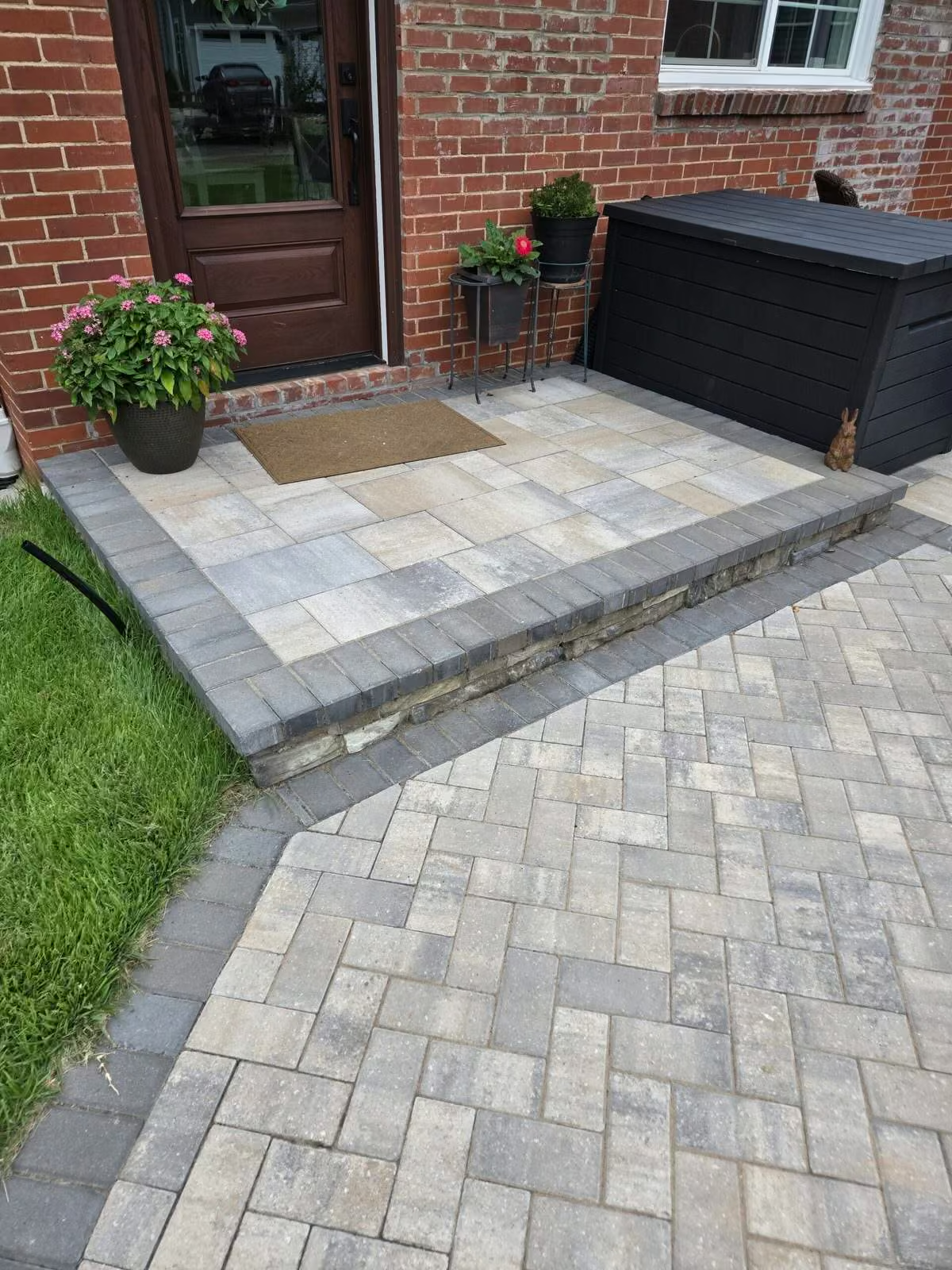
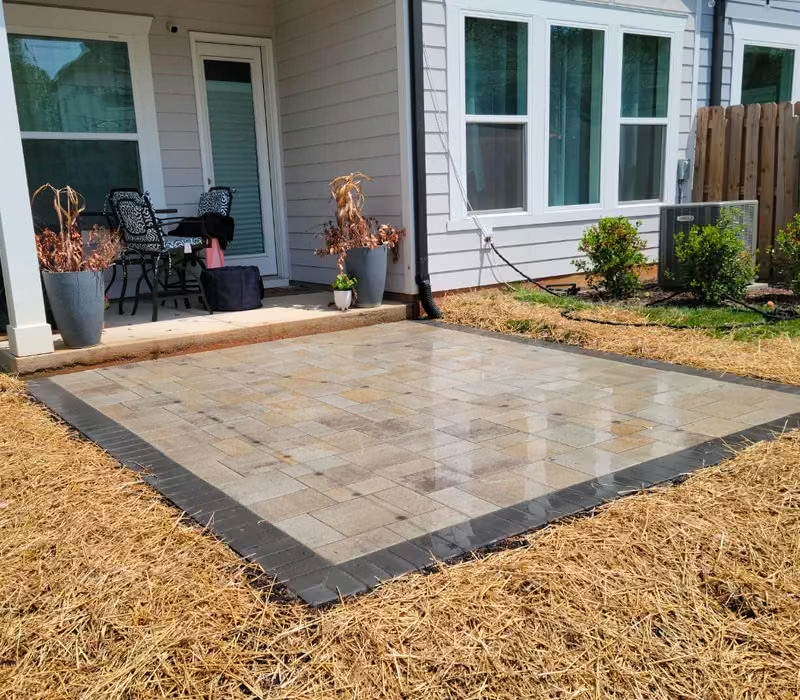
Brick delivers classic curb appeal with a structural advantage: individual pavers can be replaced if one cracks. You never have to repour an entire surface. Concrete pavers offer the same repairability at a lower price point, with a wider range of finishes.
Both options are engineered to resist the cracking and heaving that affects poured concrete slabs when Charlotte’s clay soil shifts seasonally.
Best for: budget-conscious projects, traditional home styles, homeowners who want easy future repair without full replacement.
From custom outdoor living spaces to structural masonry repair, every project is engineered for North Carolina’s climate and built by our own Charlotte-based team—never subcontractors.
According to the National Association of Realtors, outdoor living improvements — including stone patios — return an average of 60–80% of their cost at resale. A well-built patio also shortens time-on-market for Charlotte homes in competitive neighborhoods. Here is a general price range for installed stone patios in the Charlotte metro area:
Material | Installed Cost / sq ft | Expected Lifespan | Best For |
Natural Flagstone | $18 – $30 | 30–50+ years | Rustic, organic look |
Travertine | $22 – $35 | 30–50+ years | High-end & pool areas |
Slate | $20 – $32 | 25–40 years | Modern, sleek designs |
Brick Pavers | $15 – $24 | 25–40 years | Classic curb appeal |
Concrete Pavers | $12 – $20 | 20–30 years | Budget-conscious projects |
* Estimates for a standard 200–400 sq ft patio. Final cost depends on site conditions, material grade, drainage complexity, and design details.
The most common hidden cost in any patio project is a poor base. If the ground is not properly graded and compacted before the stone goes down, you will see shifting, sinking, and standing water within 2–3 years. We factor all of that in from day one.
Want an exact number? Call us at (704) 905-9056 and we’ll come out for a written estimate at no charge.
Every patio we build follows the same disciplined process. It is not the fastest approach — but it is why our patios are still looking correct 15 years after installation while others have shifted or cracked.

We walk the space with you, take measurements, evaluate the terrain, and ask the questions that matter:
How will you use the patio? Do you entertain? Are there existing drainage issues?
From there, we recommend the material and layout that fits your needs and budget.

RG StoneMind is fully licensed in North Carolina, bonded, and insured with general liability and workers' compensation on every job site. Insurance documentation and license verification are available before work begins. If a contractor can't show you these, walk away.

Once the base is solid, the stone goes down. Each piece is cut to fit cleanly, set at the correct level, and checked for alignment throughout the process. We use polymeric sand for paver joints on concrete and brick patios — it locks pavers in place, prevents weed growth, and resists washout. Natural stone installations are sealed to protect against moisture absorption and staining.
It’s the most common question we get before a site visit. Here is the honest answer.

Poured concrete is cheaper upfront — typically $6–8 per sq ft installed versus $12–35 for natural stone or pavers. If budget were the primary constraint, concrete would be a valid starting point.

Concrete patios crack. In Charlotte’s clay soil, it’s a question of when, not if. A cracked concrete slab usually means a full replacement. A cracked paver means replacing one piece.

Permeable pavers allow water to filter through the surface, reducing runoff. Poured concrete is impervious — water goes wherever the slope sends it, which matters on Charlotte’s clay-heavy lots.

Natural stone and pavers age well. Concrete stains, discolors, and develops cracks that are difficult to repair without visible patching.

According to the National Association of Realtors, outdoor living improvements return an average of 60–80% of their cost at resale. Natural stone and paver patios consistently outperform poured concrete on that metric.

The bottom line: if you’re in a home for the long term and you want a patio that’s still performing well when you sell, stone or pavers are the better investment. We’ll tell you that honestly during the site visit, even if concrete makes more sense for your situation.

Not general contracting—focused stone and brick work.

Written estimates, clear timelines, no surprise line items on the final invoice.

Proper grading, drainage engineering, and base compaction.

From flagstone and travertine to slate, brick, and custom combinations.

We work exclusively in the Charlotte metro. This is our community.
We are happy to provide references from completed projects in your neighborhood. Ask us during the site visit.
The best patio is one that fits the way you actually live. Here are the combinations our Charlotte clients request most frequently:

A natural stone patio paired with a custom fire pit is the most requested upgrade we build. It extends your outdoor season well into November and turns a plain backyard into a space people want to use. We design the fire pit as part of the patio from the start—not added on afterward—so materials, levels, and drainage work as one integrated system.

Charlotte's backyards are rarely flat. If your yard has a slope, a retaining wall is structural — not just decorative. It creates a level patio surface, prevents soil erosion, and can incorporate built-in seating or planting beds. We design and build both elements together so the wall and patio are engineered as one system, not two separate projects competing with each other.

Connecting your patio to the front of the house, a side gate, or a detached garage with a matching stone walkway creates a finished, cohesive look that significantly improves curb appeal. We use the same materials and base preparation for walkways as for patios, so everything ages at the same rate and nothing looks added as an afterthought.
1. How soon can you use the patio?
For paver patios: you can walk on the surface the same day. We recommend waiting 24 hours before moving furniture or heavy items, and 72 hours before placing anything significant like a grill or outdoor kitchen.
For natural stone with mortar or sealant: we’ll give you a specific curing window based on the material and weather conditions during installation. Typically 24–48 hours.
2. What does the first year of maintenance look like?
Months 1–3: Rinse with water as needed. Avoid harsh chemical cleaners. Polymeric sand joints may need minor touch-up if heavy rain washes any out before full cure.
Months 3–12: Normal use and cleaning. For natural stone, avoid acidic products that can etch the surface.
Years 1–2: Reseal natural stone and travertine once. We’ll provide the exact product and instructions for your material before we leave the site.
Year 5–6: Concrete and brick paver joints may benefit from fresh polymeric sand. Straightforward DIY job, or we can return to do it.
We install custom stone patios throughout Charlotte and the surrounding communities. Whether you’re in the city or 30 minutes out, we come to you. Charlotte—all neighborhoods, including SouthPark, Ballantyne, Myers Park, Dilworth, Plaza Midwood, NoDa, Steele Creek
Fort Mill, SC, and surrounding York County communities
Not sure if we cover your specific area? Call (704) 905-9056 and we will confirm.
A standard residential patio of 200–400 sq ft typically takes 3 to 7 days from start to finish. Larger projects, complex drainage situations, or custom stone combinations take longer. We give you an accurate timeline during the site visit, not an estimate over the phone.
For most Charlotte homeowners, flagstone or travertine are the top choices. Both handle Mecklenburg County’s humidity and seasonal temperature shifts well, stay cooler underfoot than dark concrete, and remain structurally stable in clay-heavy soil when installed on a correct compacted aggregate base. Brick and concrete pavers are excellent budget-friendly alternatives engineered for freeze-thaw cycles and clay soil movement.
For most ground-level patios without attached structures, no building permit is required in Charlotte or Mecklenburg County. However, projects must still comply with local zoning rules, including setbacks and drainage requirements. Permits become mandatory if the project includes electrical or plumbing elements (outdoor kitchens, fire pits with gas lines); significantly increases your property’s impervious surface coverage; or involves a covered structure attached to the home.
HOA approval may also be required separately from city permits. We advise on both during the site assessment and handle required documentation as part of the project scope.
Installed stone patios in the Charlotte metro range from approximately $12 to $35 per square foot, depending on material, site conditions, and drainage complexity. Natural flagstone and travertine sit at the higher end; concrete pavers are at the lower end. Labor accounts for approximately 50% of the total installed cost in the Charlotte market. An on-site visit is the only accurate way to get a real number specific to your property.
Yes — and we do it regularly. A sloped yard requires careful grading and, in most cases, a retaining wall to create a level, stable patio surface. Done correctly, a patio on a slope is as durable as one on flat ground. Never let a contractor lay stone directly over an uneven slope without addressing the grade first — it is the fastest path to drainage failure and structural instability.
At RG StoneMind, the same person who visits your property for the estimate oversees the project from excavation to final walkthrough. We do not hand off to unsupervised crews.
At RG StoneMind, drainage is engineered as part of the original project scope with a calculated 2% grade slope and, when needed, a French drain or catch basin. If water behavior after a significant rain event is not what we designed, we return and correct it at no additional charge.
Tell us about your project—stone patio, brick driveway, retaining wall, outdoor fireplace, chimney repair, or anything in between. We’ll come out, assess the site, and give you a clear written estimate with no obligation. Most free estimates are scheduled within 5 business days.